 BIG TOYS
What is forestry mulching?
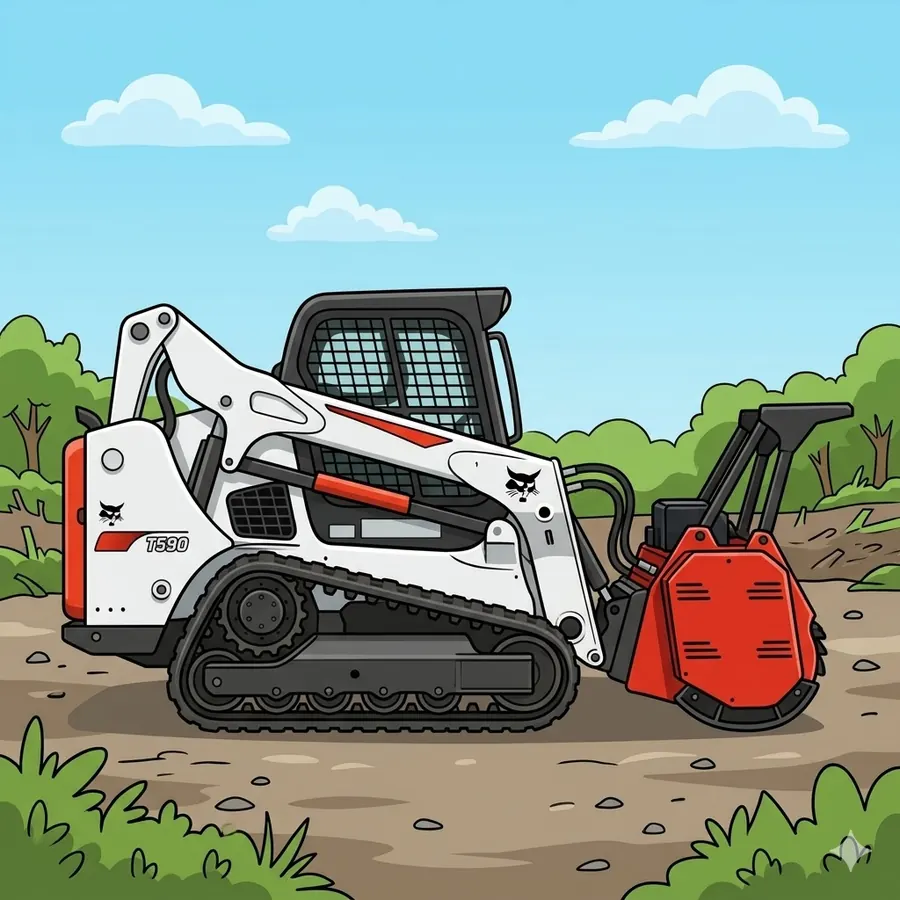
Forestry mulching is a land clearing method that uses a single machine — in our case a tracked Bobcat T590 skid steer — fitted with a high-speed mulching head. The head’s steel teeth shred standing brush, saplings and small trees into wood chips and lay them back down on the ground as a mulch layer. Cutting, grinding and spreading all happen in one step.
Compare that to traditional clearing, where a dozer pushes everything over, the debris gets piled and burned or hauled off, and the topsoil gets scraped and rutted along the way. Mulching skips the piles, the burn permits and the cleanup.
Why landowners choose mulching
- No burn piles or haul-off. Material stays on site as mulch, so there are no debris piles to burn, no burn-ban delays, and no trucking bills.
- Healthier ground. The mulch layer shades the soil, holds moisture, slows erosion on slopes and breaks down into organic matter over time.
- Selective clearing. We can take out the brush and junk trees while leaving the oaks, pecans and shade trees you want to keep.
- Low ground disturbance. A tracked machine spreads its weight, so we leave far less rutting than a dozer — important on wet ground and established lawns.
- Fast, visible results. Many residential and small-acreage jobs are done in one to two days.
What we can mulch
Typical forestry mulching jobs in North Texas and Oklahoma include:
- Eastern red cedar and juniper thickets
- Mesquite, huisache and other thorny brush
- Yaupon, privet, honeysuckle, greenbrier and briars
- Saplings and small trees that have taken over a pasture or fence line
- Storm-downed limbs and small fallen trees
- Overgrown lots before a home, barn or shop is built
Very large trees, stumps you need fully removed below grade, and rocky demolition debris may need a different approach. Tell us what’s on the property and we’ll give you an honest answer about the right tool.
Our forestry mulching equipment
Our Bobcat T590 runs a drum mulcher, a disc mulcher and an articulating brush cutter. The drum mulcher gives a finer finish and handles ground-level brush; the disc mulcher is fast on standing saplings and small trees; the brush cutter reaches into ditches, banks and fence lines. Because the machine is compact and tracked, it fits through gates and into wooded areas that larger equipment can’t reach. See all our equipment.
How a forestry mulching job works
- Send us the property. Address, rough acreage, a few photos and what you want the land to become.
- Get a clear quote. We look at density, terrain, access and which trees stay, then give you upfront pricing.
- We mulch. We mark keepers, clear the brush and leave a walkable, mowable mulch layer.
Forestry Mulching FAQs
How much does forestry mulching cost?
Pricing depends on acreage, how dense the brush is, the size of the trees, terrain and access, and how many trees you want saved. We give a site-specific, upfront price — request a free quote or read our guide to what drives forestry mulching cost.
Will the mulch kill my grass?
A normal mulch layer breaks down over a season or two and grass usually returns through it. In heavy cedar areas the layer can be thicker; we can spread it out more if you plan to reseed.
Does mulching remove the stumps?
The mulcher grinds stumps down to roughly ground level so you can walk and mow over them. Full below-grade stump and root removal for foundations or driveways is a separate step.
Do cedars grow back after mulching?
Eastern red cedar generally does not resprout once it is cut below its lowest green branches, so mulching is very effective on cedar. Species like mesquite and many hardwoods do resprout, so they need follow-up mowing or treatment.